

Last few days to join Posture in Motion!
Apply here: https://hedishah.com/posture-in-motion/
Entry is by application so I can make sure the group feels like a well-matched, supportive container for everyone.
This is a 13-week small-group posture and somatic practice for people who want to feel more at home in their body, move with more ease, and begin shifting the patterns that keep them tense, braced, or in pain.
In mainstream movement and rehab spaces, we hear a lot about how to “fix” your lower back, hip flexors, and tight hamstrings.
But we rarely hear about the actual bone they all connect to…
Your pelvis.
Back in the day, when I was dealing with persistent lower back pain and intense hamstring tightness after every strength workout, I remember visiting a chiropractor who said,
"Wow, one of your legs is shorter than the other and your hamstring is really tight. Here is a figure four stretch and some foam rolling. Do these all the time."
Years later, I learned:
My leg was not shorter. My pelvis was rotated toward the right, which made it appear that way.
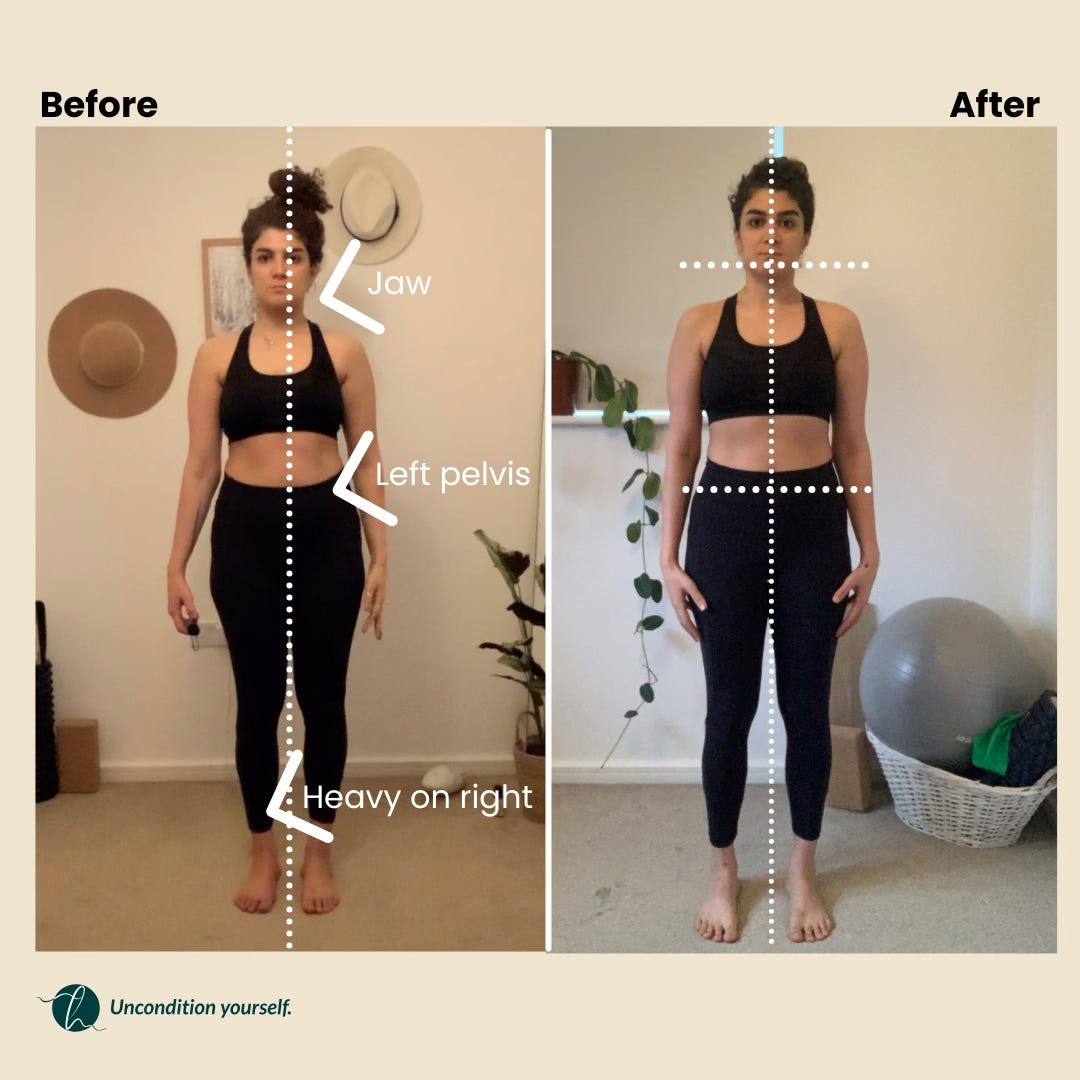
My hamstring was not tight for no reason. It was protecting me. My nervous system was holding tension to keep me from falling forward because I had no core or pelvic stability.
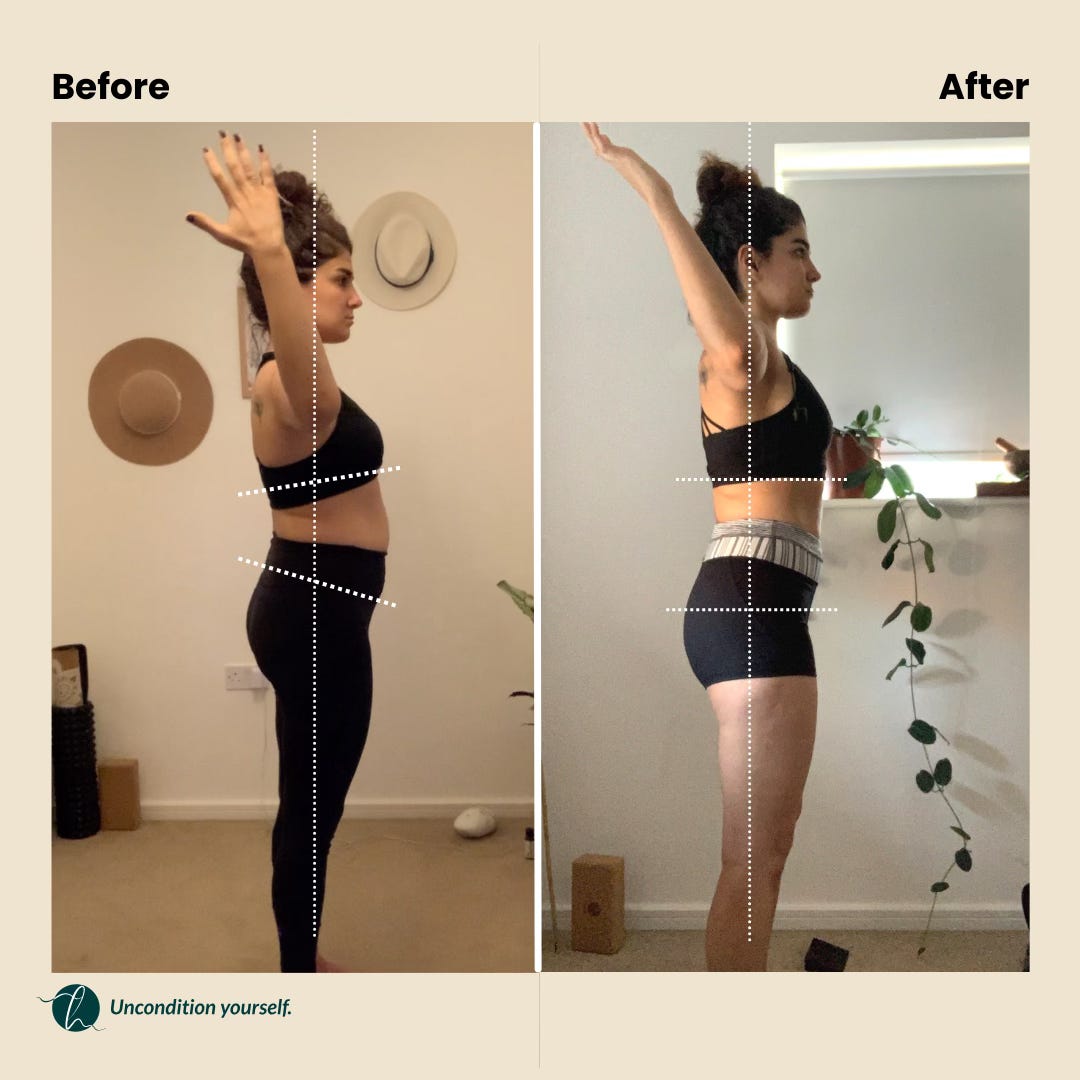
3. Stretching was not the solution. I needed to restore stability in my posture. (You can learn more about why I no longer rely on stretching by reading the post below)
Why I quit stretching?

In mainstream fitness and rehab spaces it’s become completely normal to only prescribe stretching as the fix for tightness.
Pelvis stability is foundational to how we orient ourselves in space and how we experience safety.
Everything is more interconnected than you think. There is a strong relationship between:
The pelvis and the diaphragm
The pelvis and the feet
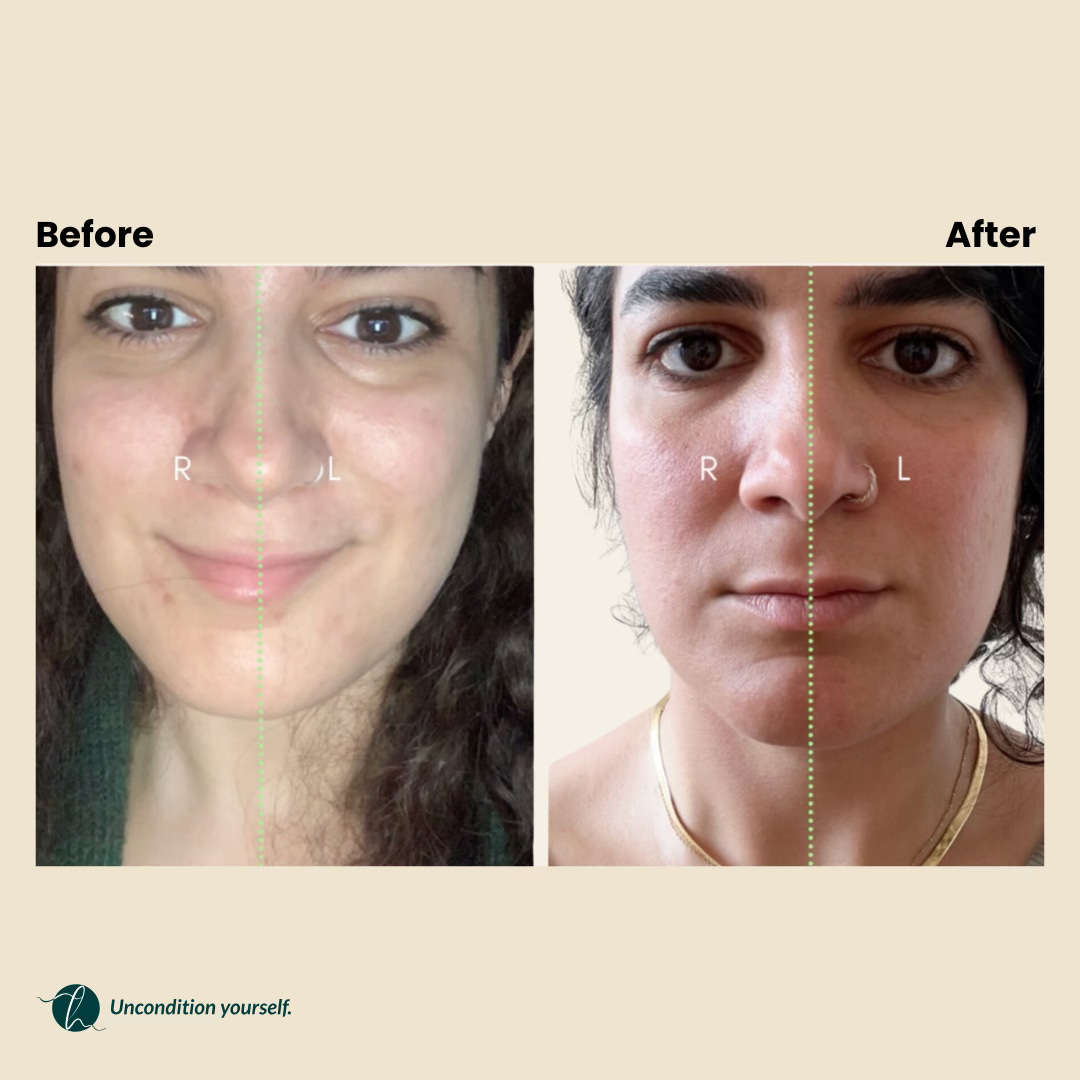
The pelvis and the jaw
The pelvis and your shoulders
I could go on and on.
Your pelvis is meant to move in eight directions. But we usually only hear about anterior and posterior tilt. There is more:
Hiking and dropping
Shifting left and right
Rotating left and right

When we lose this natural movement, whether from lifestyle, injury, trauma, or pregnancy, it creates a chain reaction.
We might experience knee pain, lower back discomfort, or even symptoms we rarely link to the pelvis, like bladder control issues. In my case, it also showed up in my jaw.
In the third session of Posture Reset on Insight Timer, we explored pelvis stability:
How your pelvis actually works
A gentle self assessment
Breathing mechanics (yes, again, because it matters every time)
Sensory based exercises to restore stability
The structure of this session is very similar to how each session is designed in Posture in Motion. These sessions are different from your typical yoga or stretching classes. They are grounded in sensation. We use the brain and body together to feel things you may not have noticed before.
As some of my clients say, it is humbling. From the outside, it may look like you are not doing much, but inside, you are sweating, shaking, and feeling more than you expected.
So go slow. Stay curious.
Let me know what stood out to you. I would love to hear.
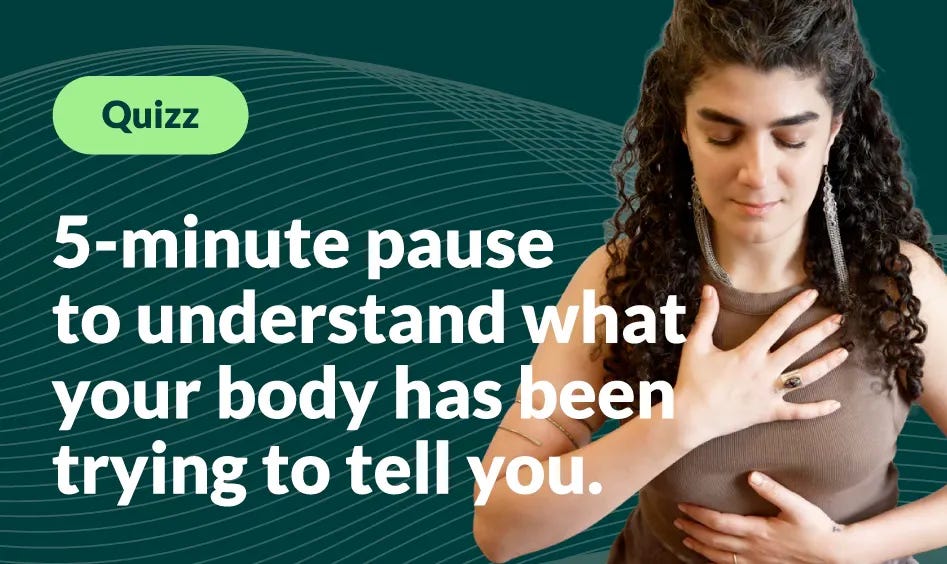
👁️ What has your body been trying to tell you?
The way we hold ourselves matters. Not just because of how it looks. But because it shapes how we live, how we relate, and what we’re capable of imagining. Let your body speak. Let it interrupt the collective war and offer you a new way of being entirely.
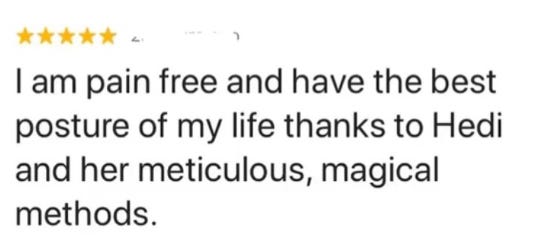
Client’s Unconditioning ↓
Apply for Posture in Motion ↓
Posture in Motion is a small-group posture and somatic practice for people who want to feel more at home in their body, move with more ease, and start shifting the patterns that keep them tense, braced, or in pain.
Thank you for joining me on the path of unconditioning,
––––––––––––––––––
Hedi Shah
––––––––––––––––––
👁️ Mindfulness Teacher & Bodyworker
🐉 Nervous system regulation, breathwork, and posture-focused strength training to target the cause of what keeps you stuck and in pain, not just symptoms.
📲 Website | Youtube | LinkedIn | Insight Timer
Wow! Amazing, deep, and very different. I just realized this weekend why I've had constricted breathing, though I'm a long-time consistent diaphragm breather. I've been armored in my abdomen for decades.
Thank you for your deep dives and insight, Hedi!