
Applications are open for Posture in Motion.
A small-group posture and somatic practice for people who want to feel more at home in their body, move with more ease, and begin shifting the patterns that keep them tense, braced, or in pain. Apply here: https://hedishah.com/posture-in-motion/
Even in meditation, I was performing.
We live in a system that praises perfection and makes our humanness wrong. A system that turns worth into a finish line, one more way to keep us running, learning, consuming, and proving.
So many of us try to feel safe through control. We use spiritual practices to overcome life instead of allowing it.
For years, I did the inner work and pursued spiritual practices, hoping that one day I’d finally become superhuman and rise above my humanness.
But my body had its own way of interrupting that pursuit.
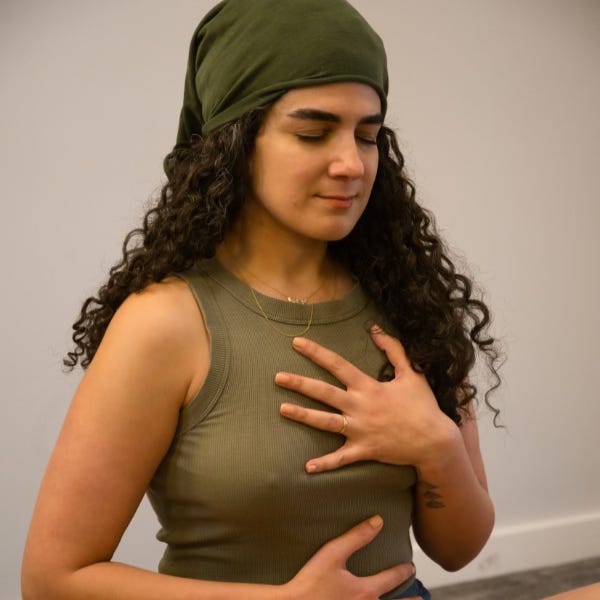
After years of chronic neck, back, and foot pain following my car accident, I came to posture work out of desperation. I thought I was there to fix my pain.
Instead, my body showed me all the ways I’d learned to brace, perform, and hold myself together in my relationship to the world, to life, and to the divine.
My pain began to dissolve but something deeper happened too. Posture work became the least expected, and most powerful, doorway back to spirituality.
And this Rumi poem says that more eloquently than I ever could…
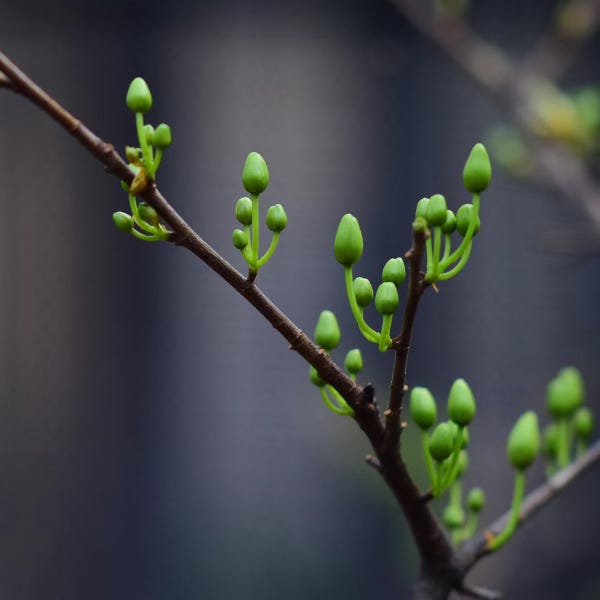
“The signs of drying up resemble a branch that can’t bend or sway.
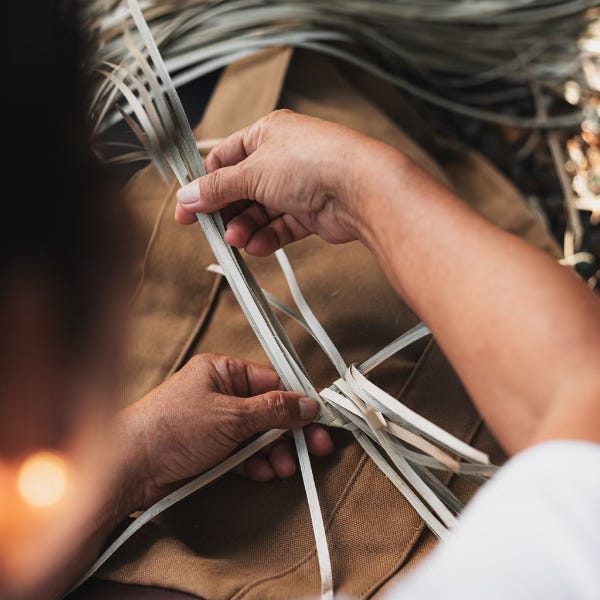
The limbs of those detached from the world are supple, like a fresh branch that bends easily in the weaving of a basket.”
— Rumi
This poem has been a muse behind Posture in Motion. The “weaving of a basket” is where posture becomes spiritual, but the whole poem is the journey that takes us there. To me, this is the practice of unconditioning, and the body gives us the doorway in.
Allow me to be your posture-meets-literature teacher for a second….
“Drying up”
When your nervous system stays in a constant state of stress, defense, or holding, you stop breathing fully into your rib cage. Your muscles stay gripped. Your tissues lose their natural slide and glide. Physical symptoms are a response to something deeper.

Feldenkrais writes about how our need for security is tied to dependence, and how much of human activity is shaped by the craving for independence, approval, affection, or attention. This is part of what “drying up” means. The body starts organizing itself around survival: Am I safe? Am I loved? Am I approved of? Am I doing this right? Even when it costs us our sovereignty.
And yes, we need these patterns to survive. Especially as children, this is how we stay connected, protected, and alive.
But as adults, we get to choose. We can start to notice the old patterns instead of being run by them. The problem is, by then, many of those patterns are already deeply conditioned into our body and mind. They no longer feel like strategies. They feel like who we are.
“A branch that can’t bend or sway”
This part brings to mind a body that has learned to stay in fight, flight, freeze, or fawn in order to feel safe. This is also where so much posture advice gets it wrong. We’re often told to sit up straight, pull our shoulders back, brace our core, and hold the “correct” shape. But if the body is already organizing itself around survival, more holding is rarely the answer.
Dry wood snaps in the wind. A body that only knows how to brace eventually loses its ability to respond.
Your posture is not a position to maintain because it’s a dynamic conversation with gravity, breath, emotion, and life. A healthy spine is meant to ripple, absorb, soften, and micro-adjust with every breath and step.
“Limbs of those detached from the world”
Somatically, “detachment” isn’t numbness, dissociation, or spiritual bypassing. It’s a return to sovereignty. It’s the moment the body begins to unhook from old survival contracts: the need to perform, control, be approved of, stay protected, and hold everything together.
If “drying up” is the body organizing itself around old safety, and the branch that can’t bend is what happens when those patterns become deeply ingrained...then detachment is the beginning of a new reference point for safety. It’s a shift from being ruled by who we were conditioned to be, toward becoming who we actually are, what Jung called individuation.
This is when your nervous system capacity expands to hold the “and,” the bridge between the dualities of this human life and all the paradoxes we experience. The body develops a new baseline of trust and safety, one that makes space for us to simply be. We no longer have to fight harder to make sense of it all. The body can go from defense to ease. The jaw unclenches. The shoulders drop. The glutes stop gripping. The breath finds more room.
“Like a fresh branch that bends easily”
This is what becomes possible when the body is no longer organized around old safety.
This is the core goal of working with your posture somatically. We aren’t trying to force your body into a rigid “correct” alignment. We’re restoring suppleness. When you free yourself from adaptive posture patterns, allow your breath to move freely, and let your pelvis and ribs organize, you get genuine support from the inside out.
“In the weaving of a basket”
A fresh branch can be woven because it has enough life in it to bend. It doesn’t collapse, and it doesn’t resist every touch. It can participate.
To me, this is a metaphor for life. For learning to trust what Dylan Thomas called “the force that through the green fuse drives the flower.” The same force that moves the flower into bloom, moves breath through your ribs, and teaches your body how to meet life.
This is what it means to let the Tao, life, God, or Source move through you. Your body stops trying to control every shape, and begins to organize itself around what life is asking of you.
This is why posture work became spiritual for me.
It didn’t teach me how to hold myself together better.
It taught me how to notice all the places I was still trying to.
The jaw. The ribs. The pelvis. The breath. The need to be approved of. The need to be safe. The need to become some perfected, untouchable version of myself before I could finally relax.
And slowly, my practice became less about fixing my posture and more about building enough trust in my body to stop performing being human.
To soften without collapsing.
To be shaped without disappearing.
To participate in life instead of bracing against it.
This is the work we do inside Posture in Motion.
We don’t fix your posture by forcing your body into a better shape, but listening to the patterns your body has built around old safety, and gently giving it new options.
Applications here: https://hedishah.com/posture-in-motion/
Thank you for joining me on the path of unconditioning,
––––––––––––––––––
Hedi Shah
––––––––––––––––––
👁️ Mindfulness Teacher & Bodyworker
🐉 Nervous system regulation, breathwork, and posture-focused strength training to target the cause of what keeps you stuck and in pain, not just symptoms.
📲 Website | Youtube | LinkedIn | Insight Timer